

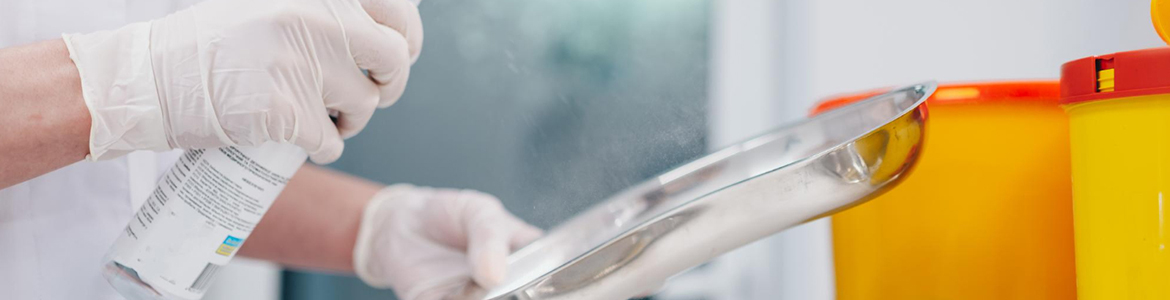
In pharmaceutical manufacturing, the production process does not end when a batch is complete. Before equipment can be used for the next batch, it must be cleaned thoroughly to remove product residues, processing materials and potential contaminants. This step is essential for maintaining product quality and reducing the risk of cross-contamination.
Solvents play an important role in this process, particularly when residues are difficult to remove using water alone. Acetone is one such solvent. Known for its ability to dissolve many organic substances and evaporate rapidly, it has applications in pharmaceutical processing and laboratory operations.
But how does acetone help with residue removal, and what should manufacturers consider when using it in pharmaceutical environments?
Understanding Acetone and Its Cleaning Properties
Acetone, also known as Propanone or Dimethyl Ketone, is an organic solvent with the chemical formula C₃H₆O. It is a clear, colourless liquid that is miscible with water and many organic liquids.
One of its key characteristics is its ability to dissolve a wide range of substances, including certain oils, resins and organic compounds. This makes it useful when a compatible residue needs to be dissolved and removed from a surface.
Acetone also has a relatively low boiling point of approximately 56°C, allowing it to evaporate readily under ordinary conditions. This can be advantageous in applications where rapid solvent removal is desirable.
However, effective cleaning depends on the nature of the residue, the equipment material and the cleaning procedure. Acetone is not suitable for every contaminant or surface, making careful solvent selection essential.
Why Pharmaceutical Equipment Cleaning Matters
Pharmaceutical manufacturing equipment may come into contact with active pharmaceutical ingredients (APIs), intermediates, excipients and other processing materials. Following production, traces of these substances may remain on product-contact surfaces, including vessels, pipes, filters and other equipment components.
If these residues are not adequately removed, they may carry over into a subsequent batch and potentially affect its quality, safety or purity.
Cleaning procedures are therefore designed to remove residues to scientifically established acceptance limits. They must also address residues from cleaning agents themselves, as well as other relevant contaminants.
In regulated pharmaceutical manufacturing, cleaning validation provides documented evidence that an established cleaning procedure can consistently achieve the required level of cleanliness. The choice of cleaning agent forms part of this wider process.
How Acetone Supports Residue Removal
1. Dissolving Organic Residues
Certain pharmaceutical processes involve organic compounds that may not dissolve readily in water. Depending on their chemical properties, these residues may require an organic solvent for effective removal.
Acetone can dissolve many organic substances by interacting with their molecules and allowing compatible residues to enter the liquid phase. The dissolved material can then be removed through an appropriate cleaning and rinsing procedure.
Its effectiveness depends on the specific residue. Manufacturers must establish whether acetone can dissolve the substance of concern under the proposed cleaning conditions rather than assuming that it will remove every type of deposit.
2. Supporting Laboratory Cleaning
Laboratories associated with pharmaceutical development and quality control handle a wide range of chemical substances. Residues left on laboratory glassware and equipment can interfere with subsequent analyses or introduce unwanted contamination into samples.
Acetone may be used in selected laboratory cleaning procedures where its solvent properties are appropriate for the residue and the equipment material.
Its use must follow the laboratory’s established procedures, including any requirements for subsequent rinsing, drying and verification of cleanliness. Where equipment is used for sensitive analytical work, suitable cleaning procedures help reduce the risk of residual substances affecting results.
3. Facilitating Solvent Removal
Acetone’s relatively low boiling point means that it evaporates readily compared with many higher-boiling solvents. This property can help facilitate solvent removal after an appropriate cleaning step.
Nevertheless, rapid evaporation should not be confused with complete cleaning. Although acetone itself may evaporate, dissolved contaminants can remain on a surface if they are not adequately removed. Residual acetone must also be controlled wherever its presence could affect the next manufacturing operation.
A suitable cleaning procedure must therefore consider both the removal of the original residue and the removal of the cleaning solvent.
Factors to Consider When Selecting Acetone
1. Purity and Solvent Quality
The quality of acetone matters when it is used in pharmaceutical environments. Unwanted impurities in a solvent may introduce additional contaminants or affect the intended process.
Manufacturers should select an appropriate grade based on the intended use, relevant specifications and applicable quality requirements. Product specifications and a Certificate of Analysis (CoA) can help establish whether the supplied material meets the required criteria.
2. Equipment Compatibility
Not every solvent is compatible with every equipment material. Acetone can affect certain plastics, coatings, seals and elastomers, depending on the material and exposure conditions.
Before introducing acetone into a cleaning procedure, manufacturers should evaluate compatibility with the equipment’s construction materials, including seals and gaskets. This helps prevent material degradation and potential contamination.
3. Cleaning Validation and Residue Monitoring
A cleaning procedure must demonstrate that it can consistently remove the relevant residues to acceptable levels. The validation approach should consider the substance being removed, the equipment design, the cleaning conditions and the method used to assess cleanliness.
Visual inspection may identify visible deposits, but analytical testing may also be required to detect residues that cannot be seen. Any acetone-based procedure must be assessed and validated for its intended application.
4. Safe Handling and Storage of Acetone
Despite its practical advantages, acetone requires careful handling. It is highly flammable, and its vapours can form flammable mixtures with air. Appropriate ventilation, ignition-source control, suitable protective equipment and approved storage arrangements are essential.
Pharmaceutical facilities should follow the relevant safety data sheet (SDS), workplace procedures and applicable regulations. Waste solvents must also be collected and disposed of through suitable approved systems.
Supporting Pharmaceutical Applications with Purosolv
Selecting the right solvent is an important part of maintaining reliable pharmaceutical processes. Manufacturers need to consider not only the solvent’s ability to dissolve a particular residue, but also its purity, compatibility, documentation and suitability for the intended application.
Purosolv, a brand of Deepak Fertilisers and Petrochemicals Corporation Limited (DFPCL), offers pharmaceutical-grade acetone in multiple grades, including USP/NF, BP, EP, IP and multicompendial options. Its product range is available in different pack sizes, from smaller bottles to drums and bulk quantities.
For manufacturers evaluating acetone for pharmaceutical processing or laboratory applications, selecting the appropriate grade and reviewing the relevant product specifications and quality documentation are important steps. The final choice should always reflect the requirements of the intended process and the facility’s established cleaning procedures.
Conclusion
Acetone’s solvent properties and rapid evaporation make it useful in selected pharmaceutical and laboratory applications involving organic residue removal. However, its effectiveness depends on the substance being removed, equipment compatibility and the conditions under which cleaning takes place.
In pharmaceutical manufacturing, a suitable solvent is only one part of an effective cleaning strategy. Validated procedures, appropriate residue testing, controlled solvent quality and safe handling practices are equally important.
By offering pharmaceutical-grade acetone across multiple compendial specifications, Purosolv supports manufacturers seeking solvent options aligned with their processing and quality requirements. Choosing the right grade, supported by appropriate documentation and process validation, helps manufacturers make informed decisions about their cleaning operations.