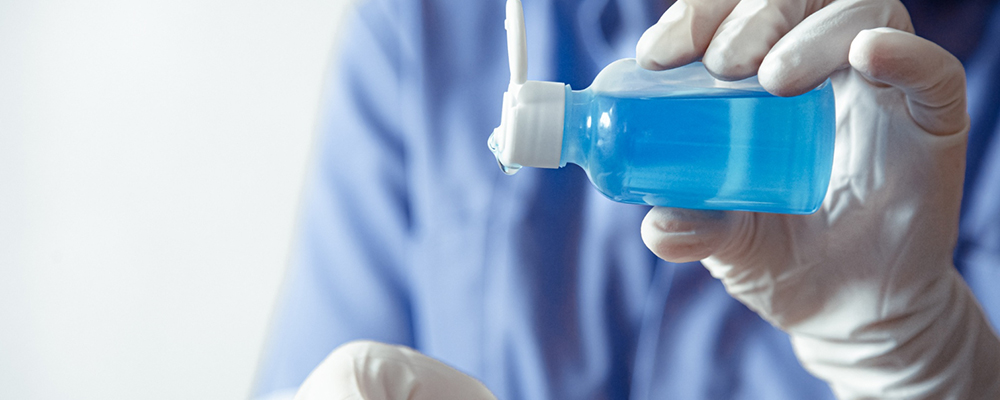
Pharmaceutical manufacturing requires controlled environments to protect products from microbial and particulate contamination. Work surfaces, equipment exteriors and tools need routine cleaning and disinfection as part of contamination control. Isopropyl alcohol (IPA) is widely used because it acts against many microorganisms and evaporates quickly. However, results depend on concentration, solvent quality, application technique, contact time and the suitability of cleaning materials.
The Role of IPA in Pharmaceutical Disinfection
IPA reduces microbial contamination on suitable surfaces by disrupting cell membranes and denaturing proteins. Its rapid evaporation is useful in facilities where surfaces need to dry without substantial liquid remaining.
Common applications include:
• Wiping work benches, stainless-steel surfaces and equipment exteriors.
• Cleaning tools and components entering controlled areas.
• Disinfecting selected surfaces in cleanrooms, isolators and laminar airflow cabinets.
• Supporting routine cleaning between production activities.
IPA is not effective against every contamination risk. It does not reliably destroy bacterial spores and is not a substitute for a validated sterilisation process. Facilities should select disinfectants according to the organisms of concern, the surface and the requirements of the area.
Why Concentration and Contact Time Matter
IPA concentration affects antimicrobial performance. Solutions around 70% are commonly used for surface disinfection because water slows evaporation and supports effective contact with microbial cells. More concentrated alcohol is not automatically more effective in every situation.
Required wet contact time depends on the formulation, target microorganisms and approved instructions. If a surface dries too quickly, the intended contact time may not be achieved. Staff should follow validated procedures, use the specified concentration and keep surfaces wet for the required duration.
Dilution must be controlled. Incorrect ratios can reduce efficacy, while unsuitable water may introduce contaminants. Prepared solutions should be labelled, stored appropriately and replaced according to site procedures.
Why Pharma-Grade IPA Quality Matters
Disinfection procedures are only as dependable as the materials used. Industrial-grade alcohol may not provide the impurity controls or documentation needed for sensitive pharmaceutical environments. Trace contaminants, water quality and non-volatile residues can affect surface cleanliness, particularly near exposed products.
When selecting IPA, manufacturers should assess:
• Purity and specifications: The grade should suit the intended application and meet relevant pharmacopeial requirements.
• Impurity control: Defined limits help reduce the risk of introducing unwanted substances.
• Batch documentation: A Certificate of Analysis (CoA), specifications and traceability records support incoming checks and supplier qualification.
• Packaging integrity: Sealed, tamper-evident packaging helps protect product integrity during storage and distribution.
• Supply consistency: Reliable availability helps sites avoid unplanned substitutions.
Pharma-grade IPA should form part of a wider contamination-control strategy; its quality alone does not guarantee disinfection.
Managing Residue and Cleanroom Risks
Although IPA evaporates quickly, a clean finish cannot be assumed. Residues may come from solvent impurities, unsuitable dilution water, wipe fibres, binders or additives. Excessive application and poor wiping practices can also leave marks or redistribute contamination.
Cleanroom teams should select low-shedding wipes suitable for the task. Wiping should follow a defined pattern, with wipes folded or replaced regularly to avoid transferring contaminants. Reusing a wipe across multiple surfaces can undermine disinfection.
For critical applications, facilities may assess non-volatile residue, total organic carbon, particle shedding or extractable ions, depending on process risk.
Integrating IPA into Validated Cleaning Procedures
Effective disinfection requires a controlled method, not simply the right product. Standard operating procedures should define where IPA is used, its approved concentration, application method, contact time and any surface-specific precautions.
A robust programme should include:
• Training personnel in handling and wiping techniques.
• Following supplier instructions and approved site procedures.
• Monitoring outcomes through environmental monitoring and other suitable checks.
• Recording preparation, use, expiry and deviations where required.
• Checking compatibility with plastics, seals, coatings and sensitive equipment.
• Rotating disinfectants when required by the contamination-control programme.
IPA is flammable. Storage and use must account for ignition sources, ventilation and container closure. Staff should consult the Safety Data Sheet and use appropriate personal protective equipment.
Supporting Compliance and Consistency
Changes to the IPA source, wipe type or dilution method should be assessed through the site quality system before implementation.
How Purosolv Supports Pharmaceutical Disinfection
Reliable disinfection depends on suitable procedures and solvents with defined quality and dependable documentation. Purosolv, a DFPCL brand, offers pharma-grade IPA aligned with pharmacopeial standards including IP, EP, BP, USP, CP and JP. DFPCL has produced IPA since 2006 and uses a direct hydration process through the propylene route to produce high-purity, benzene-free IPA.
Defined specifications, document support and supply reliability can help manufacturers manage solvent-related risks. Outcomes still depend on the correct concentration, validated procedures, suitable wipes and effective monitoring.
Conclusion
Pharma-grade IPA supports routine disinfection of suitable surfaces, tools and equipment in controlled environments. Performance depends on concentration, contact time, application technique, solvent purity and cleaning materials. IPA is not a replacement for sterilisation or for disinfectants needed to address specific microbial risks.
Combining validated procedures with appropriate quality controls and reliable sourcing supports consistent operations. Purosolv’s pharmacopeial IPA, backed by DFPCL’s experience and product documentation, can contribute when selected for the intended application.
Frequently Asked Questions (FAQs)
1. What is pharma-grade IPA used for in pharmaceutical facilities?
It is used to disinfect suitable surfaces, equipment exteriors, tools and selected cleanroom items as part of a contamination-control programme.
2. Is 70% IPA always the right concentration?
No. Around 70% is commonly used, but the approved concentration must match product instructions, the application and the validated site procedure.
3. Does IPA destroy bacterial spores?
IPA is not reliably sporicidal. Where spores are a concern, facilities need an appropriate, validated sporicidal agent or process.
4. Can IPA leave residues on cleanroom surfaces?
Yes. Residues can arise from solvent impurities, dilution water or wipe materials. Suitable IPA, compatible low-shedding wipes and good cleaning practices help reduce this risk.
5. Why is pharmacopeial quality important when sourcing IPA?
Pharmacopeial specifications, batch documentation and traceability help manufacturers assess solvent quality and support pharmaceutical quality systems.