

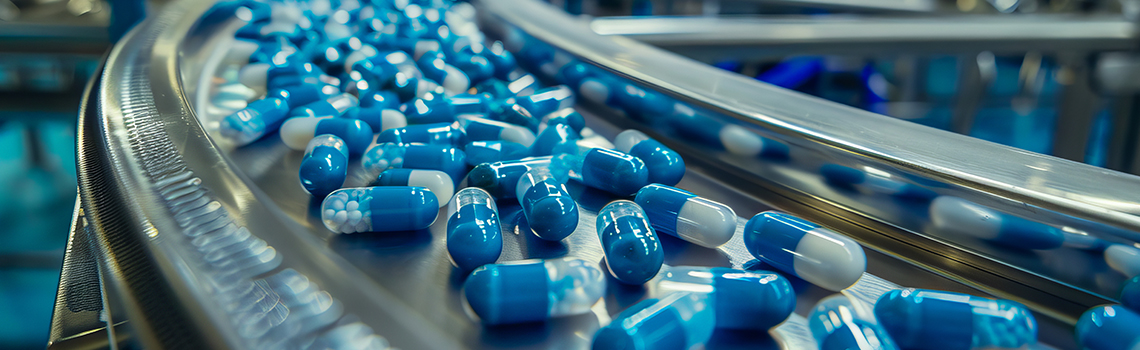
Isopropyl alcohol (IPA) is one of the most widely used solvents in pharmaceutical manufacturing. In the production of solid dosage forms such as tablets and capsules, IPA plays a vital role at several stages of the manufacturing process. From granulation to film coating, its physical and chemical properties make it an indispensable solvent in modern pharmaceutical production.
Understanding the science behind how IPA contributes to solid dosage formulation helps manufacturers make better decisions about solvent selection, process design, and regulatory compliance.
What is Solid Dosage Formulation?
Solid dosage forms are the most common type of pharmaceutical product. They include:
• Tablets (compressed, coated, or chewable)
• Capsules (hard or soft shell)
• Granules and powders
These dosage forms are preferred because they are stable, easy to store, simple to administer, and cost-effective to manufacture. However, producing a high-quality solid dosage form requires careful selection of excipients, binders, and solvents, and this is where IPA becomes important.
The Role of IPA in Wet Granulation
One of the most significant applications of IPA in solid dosage manufacturing is wet granulation. In this process, a liquid binder solution is added to a dry powder blend to form granules that are easier to compress into tablets.
IPA is commonly used as the granulating solvent for several scientific reasons:
1. Controlled Moisture Introduction
IPA introduces minimal moisture compared to water. This is especially important when the active pharmaceutical ingredient (API) is sensitive to hydrolysis or moisture-induced degradation.
2. Efficient Binder Dissolution
IPA dissolves many pharmaceutical binders effectively, including polyvinylpyrrolidone (PVP) and hydroxypropyl cellulose (HPC), producing a uniform binder solution that distributes
evenly throughout the powder blend.
3. Rapid Drying
Because IPA has a relatively low boiling point (82.6°C), it evaporates quickly during the drying stage. This shortens processing time, reduces energy consumption, and minimises heat exposure to thermally sensitive APIs.
4. Improved Granule Properties
IPA-based granulation produces granules with good flowability, compressibility, and uniform particle size all of which are critical for consistent tablet weight and hardness.
IPA in Film Coating of Tablets
Film coating is applied to tablets to improve appearance, mask unpleasant taste, and control drug release. IPA is widely used as a solvent in non-aqueous film coating systems.
In film coating, IPA dissolves coating polymers such as:
• Ethyl cellulose
• Hydroxypropyl methylcellulose (HPMC)
• Polyvinyl alcohol (PVA)
• Eudragit polymers
These polymer solutions are then sprayed onto tablet cores in a coating pan or fluidised bed coater. IPA evaporates rapidly during spraying, leaving behind a thin, smooth, and uniform polymer film on each tablet. This approach is particularly useful for moisture-sensitive APIs that cannot tolerate water-based coating systems.
IPA as a Cleaning and Purging Solvent
Beyond its role in formulation, IPA is also widely used in pharmaceutical manufacturing facilities as a cleaning and equipment-purging solvent.
Its ability to dissolve a wide range of organic residues, including excipient and API residues, makes it effective for cleaning granulators, mixers, and coating equipment between batches. IPA is preferred because:
• It evaporates without leaving a significant residue
• It is compatible with most pharmaceutical-grade materials
• It meets regulatory standards for residual solvents
Understanding IPA as a Class 3 Solvent
From a regulatory perspective, IPA is classified as a Class 3 solvent under ICH Q3C guidelines. Class 3 solvents have low toxic potential and are generally regarded as safe when used within accepted limits.
The permitted daily exposure (PDE) for IPA is 50 mg/day, and the concentration limit in pharmaceutical products is 5,000 ppm. These relatively generous limits reflect IPA’s favourable safety profile compared to many other organic solvents.
Despite this, manufacturers must still:
• Monitor and test residual solvent levels in finished products
• Validate drying processes to ensure adequate solvent removal
• Maintain documentation in line with GMP requirements
Gas chromatography (GC) is the standard analytical method used to measure residual IPA levels and confirm regulatory compliance.
Why Solvent Purity Matters in Solid Dosage Manufacturing
The quality of IPA used in pharmaceutical manufacturing has a direct impact on product quality. Impurities in the solvent can affect:
• Granule formation and uniformity
• Coating appearance and adhesion
• Residual solvent levels in the final product
• Overall product stability and shelf life
For this reason, pharmaceutical-grade IPA is manufactured to strict pharmacopeia standards, including IP, CP, JP, BP, USP, and EP specifications. These standards define purity requirements, impurity limits, and physical properties that ensure consistent solvent performance in manufacturing.
How Purosolv Supports Solid Dosage Manufacturers
Selecting the right solvent supplier is as important as selecting the solvent itself. Purosolv pharmaceutical-grade IPA is produced to meet stringent quality standards, including:
• BP (British Pharmacopoeia)
• USP (United States Pharmacopeia)
• EP (European Pharmacopoeia)
• IP (Indian Pharmacopoeia)
• JP (Japanese Pharmacopoeia)
• CP (Chinese Pharmacopoeia)
Purosolv supports solid dosage manufacturers in several key areas:
1. Consistent High Purity
Carefully controlled purity levels ensure that IPA performs consistently in granulation and coating applications, batch after batch.
2. Reliable Process Performance
High-quality IPA supports predictable drying times, uniform granule formation, and smooth film coatings helping manufacturers achieve consistent product quality.
3. Regulatory Documentation
Comprehensive quality documentation, including certificates of analysis and safety data sheets, helps manufacturers meet GMP requirements and simplifies regulatory inspections.
4. Trusted Supply Chain
A reliable supply of pharmaceutical-grade IPA ensures that manufacturers can maintain continuous production without disruption.
Future Trends in IPA-Based Solid Dosage Formulation
As pharmaceutical technology advances, IPA continues to find new and evolving roles in solid dosage manufacturing. Emerging trends include:
• Continuous manufacturing processes that require consistent solvent quality
• Spray drying techniques using IPA for amorphous dispersion of poorly soluble APIs
• Advanced granulation technologies with tighter process control
• Growing focus on solvent recovery and recycling to reduce environmental impact
IPA’s favourable regulatory classification, excellent solvency, and rapid evaporation characteristics position it well to remain a preferred solvent in pharmaceutical solid dosage manufacturing for years to come.
Conclusion
IPA plays a scientifically important role in the manufacturing of solid dosage forms. From wet granulation and film coating to equipment cleaning and process control, its combination of solvency, low moisture content, and rapid evaporation makes it an outstanding choice for pharmaceutical applications.
Selecting high-quality, pharmaceutical-grade IPA is essential for achieving consistent product quality, reliable manufacturing performance, and regulatory compliance. By partnering with a trusted solvent supplier such as Purosolv, solid dosage manufacturers can ensure that their solvent supply supports the highest standards of pharmaceutical production.
Frequently Asked Questions (FAQs)
1. What is IPA used for in solid dosage manufacturing?
IPA is used as a granulating solvent, a film coating solvent, and a cleaning agent in the production of tablets and capsules.
2. Why is IPA preferred over water for moisture-sensitive APIs?
IPA introduces far less moisture than water, reducing the risk of hydrolysis or degradation of sensitive active pharmaceutical ingredients during processing.
3. What regulatory class does IPA fall under?
IPA is classified as a Class 3 solvent under ICH Q3C guidelines, indicating low toxic potential and a relatively favourable safety profile.
4. How are residual IPA levels measured in finished products?
Residual solvent levels are typically measured using gas chromatography (GC) to confirm compliance with pharmacopeia limits.
5. How does Purosolv support pharmaceutical manufacturers using IPA?
Purosolv provides pharmaceutical-grade IPA manufactured to IP, JP, CP, BP, USP, and EP standards, with consistent purity, full regulatory documentation, and a reliable supply chain.